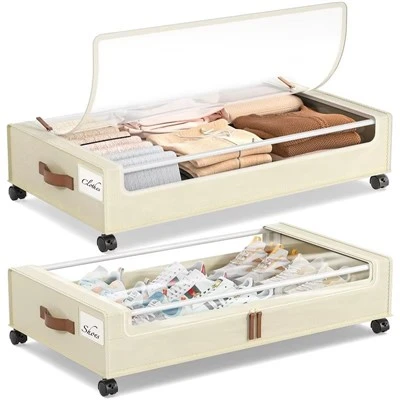
The numbers tell a clear story. The European home organizers and storage market is valued at USD 9.23 billion in 2026, up from USD 8.95 billion in 2025, and is projected to reach USD 10.74 billion by 2031. At a global level, the home organization products market is expected to grow from USD 14.8 billion in 2025 to USD 26.3 billion by 2034 - a CAGR of 6.6%.
For wholesalers and distributors, these are not abstract figures. They represent real demand from real consumers across real markets - and for those positioned correctly, they represent a sustained commercial opportunity that shows no sign of slowing down.
The question worth asking is not whether this market is growing. It clearly is. The more useful question is: why is it growing, and what does that mean for how you build your product range and sourcing strategy?
The Five Drivers Behind Europe's Home Organization Boom
1. Urbanization Is Shrinking Living Spaces
Across Europe's major urban centers - Amsterdam, Warsaw, Madrid, Barcelona - the average residential floor space per person has been declining for years. More people are living in smaller apartments, and they are doing so with the same volume of possessions that previous generations stored in larger homes.
This is not a temporary trend. European urbanization rates continue to rise, and housing supply in major cities remains constrained. The result is structural, long-term demand for products that help people do more with less space. Compact, vertical, and modular home storage solutions are no longer lifestyle upgrades - for millions of European households, they are necessities.
For wholesalers, this means the category has a demand floor that is largely immune to economic cycles. Even when consumer discretionary spending contracts, organizational products that address space constraints continue to sell.
2. The Post-Pandemic Home Investment Mindset Has Become Permanent
The period of prolonged time at home during 2020 – 2022 fundamentally changed how Europeans relate to their living spaces. Consumers began investing in their homes in ways that had previously been reserved for occasional renovation cycles. Kitchens, closets, bathrooms, and living rooms became subjects of active curation rather than passive use.
This mindset shift has proven durable. European consumers who upgraded their home environments during the pandemic have not reversed course. Instead, a new expectation has been established: the home should be functional, organized, and visually coherent. Home organization products are now a recurring household purchase category rather than a one-time acquisition.
For distributors, this translates into more predictable and repeatable demand - the kind of demand that supports sustainable wholesale relationships.
3. The "Decluttering" Movement Has Crossed From Trend to Mainstream Behavior
What began as a niche lifestyle philosophy has become a broad cultural current across Europe. The impulse to simplify, edit possessions, and create calmer living environments is now reflected in consumer media, interior design content, and retail purchasing behavior across all income brackets.
European retailers are responding. Home organization sections have expanded across major home goods chains in the Netherlands, Poland, and Spain. The category has moved from a back-of-store footnote to a front-of-store feature in many retail formats.
For wholesalers supplying these retailers, this shift in floor space allocation signals real buying intent - and a need for a broader, more design-conscious product range that goes beyond basic utility bins and wire racks.
4. Sustainability Is Reshaping Category Expectations
European consumers - particularly in the Netherlands and the Nordics - are among the most environmentally conscious in the world. This is having a direct effect on purchasing behavior within the home organization category. Single-use plastic storage products are losing ground to durable, long-lasting alternatives.
The preference is shifting toward products that are:
- Built to last, reducing replacement frequency
- Made from materials that can be recycled or responsibly disposed of
- Designed in ways that do not date quickly, supporting a "buy once, keep forever" philosophy
For wholesalers, stocking durable home organization products with strong longevity credentials is increasingly a prerequisite for accessing the better end of the European retail market - not just a differentiating factor.
5. Home Organization Has Become a Lifestyle and Aesthetic Category
Perhaps the most significant structural change in this market over the past three years is the merging of function and aesthetics. European consumers are no longer willing to accept that organized spaces must look utilitarian. They want storage products that complement their interior design choices - and they are willing to pay for them.
This shift has elevated home organization from a commodity purchase to a considered, design-led buying decision. In markets like the Netherlands and Spain, where interior design literacy is high, this is particularly pronounced. Consumers research products, compare designs, and treat their storage choices as an extension of their personal style.
For wholesalers, this creates both an opportunity and a risk. The opportunity: design-forward home organization products carry stronger margins and generate more repeat business. The risk: suppliers who continue to offer only generic, low-differentiation products will find themselves increasingly squeezed on price with no path to margin recovery.
What This Means for Wholesalers and Distributors
Understanding why the market is growing is only half the equation. The more valuable insight is how to position your wholesale business to capture that growth effectively.
Stock for scenarios, not just products European consumers now think about their home in terms of zones and use cases - the kitchen pantry, the bedroom wardrobe, the bathroom under-sink cabinet. Wholesalers who curate their range around these specific scenarios rather than offering an undifferentiated assortment of storage items will achieve better sell-through rates and stronger retail partnerships.
Prioritize range depth over width Rather than carrying a broad, shallow assortment, the most successful European home goods distributors are building depth within high-performing sub-categories. A focused, coherent range of kitchen organizers or wardrobe systems tells a retail buyer a clearer story than 200 disconnected SKUs.
Build supplier relationships that support differentiation The ceiling on commodity home storage products is getting lower. The growth in this market is being captured by products with design identity, quality credibility, and brand story. Wholesalers who work with manufacturers offering OEM and ODM capabilities are better positioned to develop exclusive lines that cannot be directly price-compared on a marketplace.
Target the right markets with the right products The European home organization market is not homogeneous. Consumer preferences, living space realities, and retail structures differ meaningfully between the Netherlands, Poland, and Spain. Distributors who invest in understanding these nuances - and source accordingly - consistently outperform those who apply a single pan-European approach.
The Window of Opportunity Is Now
Markets at this stage of growth - substantial but not yet saturated, driven by structural rather than cyclical factors - represent the best conditions for wholesale expansion. The European home organization market in 2026 fits this profile precisely.
Retailers across the Netherlands, Poland, and Spain are actively expanding their home storage ranges. They are looking for suppliers who can offer reliable quality, design-relevant products, and the flexibility to support their own market positioning. The wholesalers who establish strong supplier relationships now will be the ones with the best margins and the most defensible position when the market matures.
At Wideny Organizer, we manufacture home storage solutions built for exactly this moment in the European market - covering kitchen, closet, bathroom, and living room categories, with low MOQ from 100 units, full OEM and ODM capabilities, and direct export experience to European markets.
Explore our wholesale catalog and get in touch at www.widenyorganizer.com.